Your First Year in Business: What HMRC Expects (and How to Stay Compliant)
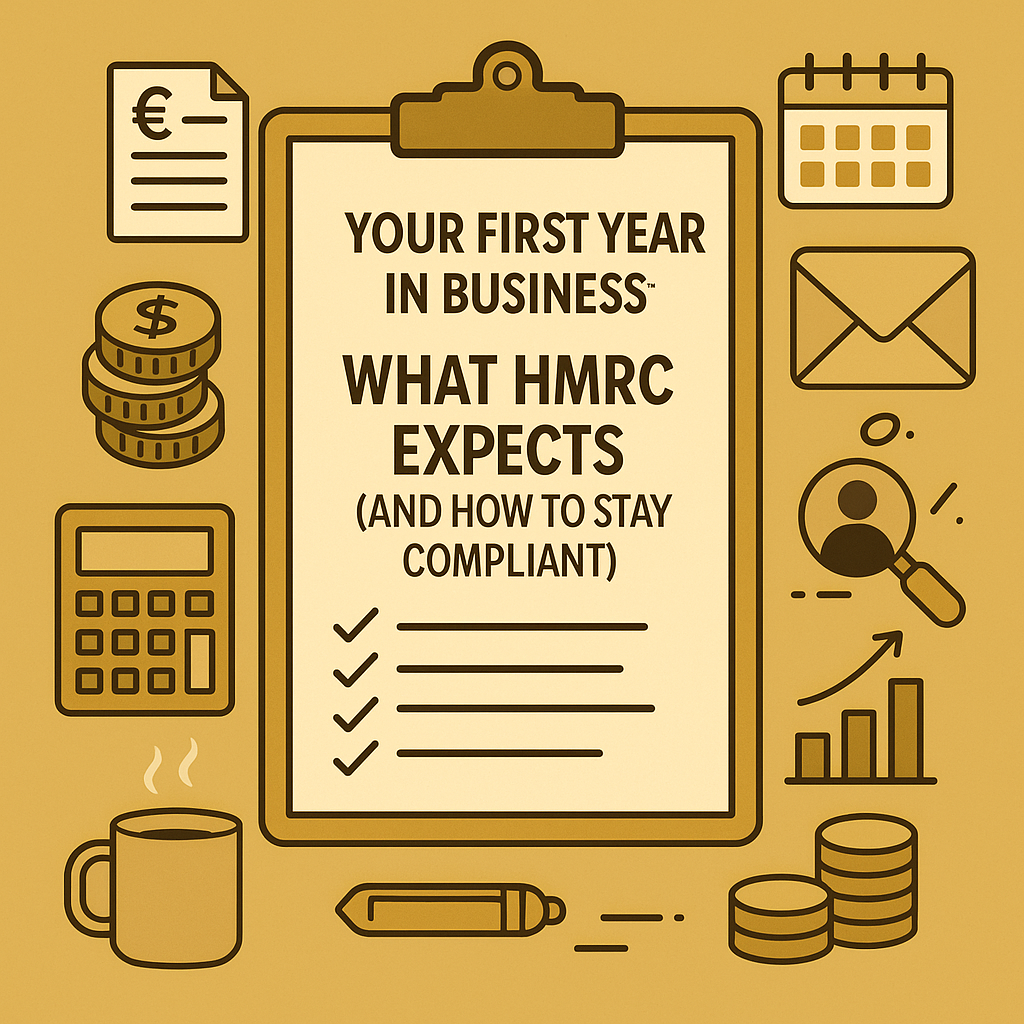
Clarus Accountancy Group — Startup Support Your first year in business is exciting, stressful, and usually a little chaotic. Between finding customers, setting up systems, and trying to stay afloat, it’s easy to overlook what HMRC expects from you — and that’s where many new businesses accidentally fall into penalties, missed deadlines, or messy financial habits. At Clarus Accountancy Group, we help startups stay fully compliant from day one, so they can focus on growth instead of paperwork. Here’s everything HMRC wants from you in year one — and how to stay on the right side of the rules. ⭐ 1. Registering Your Business at the Right Time Before you can trade properly, HMRC expects you to register your business correctly. This depends on your structure: ➡️ Sole Traders You must register for Self Assessment by 5 October in your business’s second tax year. ➡️ Limited Companies You must register for: Corporation Tax (within 3 months of starting) PAYE if employing staff VAT if turnover reaches the threshold (£90,000) Clarus ensures you register on time — no last-minute panic, no missed forms. ⭐ 2. Keeping Accurate Financial Records HMRC doesn’t just want numbers — they want clean, accurate, traceable records. That includes: Sales invoices Purchase receipts Payroll records Bank statements Mileage logs (if applicable) VAT records Director expenses Good record-keeping is the foundation of compliance.Clarus sets you up with cloud accounting that tracks everything automatically. ⭐ 3. Understanding What You Can (and Can’t) Claim Your first year is full of expenses — some allowable, some not. HMRC allows claims for: Software and subscriptions Equipment and tools Travel for business Office costs Professional fees Training relevant to your trade BUT there are rules.Clarus ensures everything claimed is HMRC-compliant — and that you don’t miss out on legitimate deductions. ⭐ 4. Meeting Key HMRC Deadlines Your first year includes several unmissable HMRC deadlines: Limited Companies Company tax return (CT600) Corporation tax payment Confirmation statement Payroll submissions (RTI) VAT returns (if registered) Sole Traders Self Assessment tax return Payment on account (if applicable) Clarus tracks all your deadlines, submits everything for you, and ensures nothing slips through the cracks. ⭐ 5. Payroll & PAYE (If You’re Hiring) The moment you employ someone — even part-time — HMRC requires you to: Register as an employer Run payroll under Real Time Information (RTI) Deduct tax and National Insurance Issue payslips Keep payroll records for 3+ years We set your payroll up correctly and manage it monthly so you stay compliant without confusion. ⭐ 6. Avoiding Common First-Year Mistakes Here are the traps we see new business owners fall into most often: ❌ Not separating personal and business expenses❌ Forgetting to register for Corporation Tax❌ Missing Self Assessment deadlines❌ Poor record-keeping❌ Not saving for tax❌ Misreporting director’s loans❌ Not registering for VAT early enough With Clarus guiding you, you avoid every one of these. ⭐ 7. How Clarus Accountancy Group Keeps You Compliant (and Stress-Free) We provide complete first-year support for startups, including: ✨ Company formation✨ Registration with HMRC✨ Cloud bookkeeping setup✨ Monthly or quarterly reviews✨ Tax planning✨ Deadline tracking✨ Ongoing compliance✨ Director advice✨ Payroll, VAT & CIS support Your first year shouldn’t feel overwhelming — and with Clarus, it won’t. Final Thoughts The first year in business sets the tone for everything that comes after. Staying compliant with HMRC isn’t just about avoiding penalties — it’s about building a confident, organised financial foundation. Clarus Accountancy Group helps you stay compliant, stay organised, and stay focused on what matters most: growing your business.
How Clarus Accountancy Group Helps Startups Build a Scalable Finance System
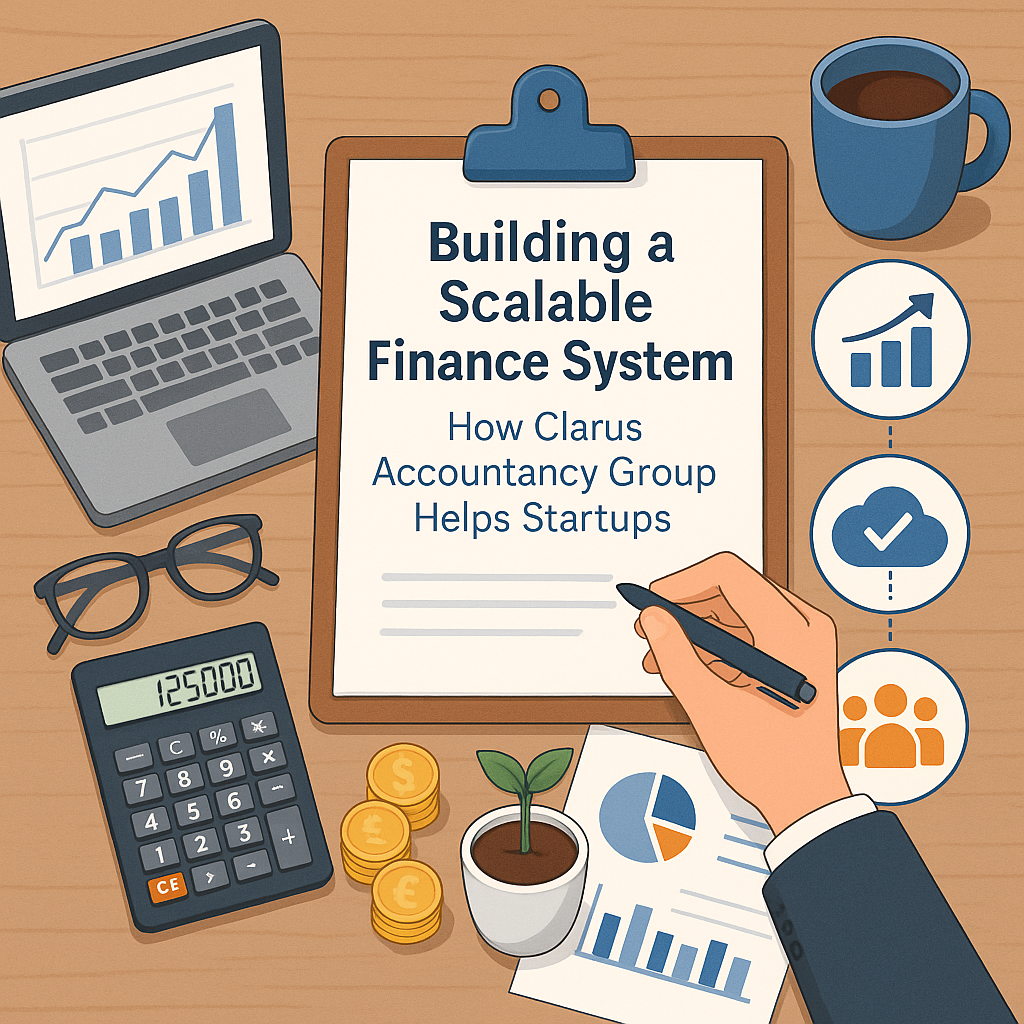
When you’re building a startup, the early excitement can easily overshadow one of the most important parts of the journey: your finance system. Many founders don’t realise that the way their finances are set up in the first year will impact everything — growth, funding, profitability, tax planning, and even whether the business survives. That’s where Clarus Accountancy Group steps in. Our mission is simple: to give startups the financial foundations they need to scale confidently and sustainably. Here’s how we make that happen. 🌱 1. Helping Founders Choose the Right Business Structure A scalable finance system starts with choosing the correct structure. Limited company? Sole trader? Partnership? Each option affects: Tax Liability Pay structure for founders Growth potential Funding options Clarus helps founders make the right choice for the business they want to build — not just the business they’re starting today. ☁️ 2. Cloud Accounting Setup That Grows With You The days of spreadsheets are long gone (and honestly, good riddance).Clarus helps startups implement cloud accounting tools such as: Xero QuickBooks Online Dext for receipts Payroll solutions Automated invoice and payment systems This gives founders real-time financial data — the kind you need to make fast, confident decisions. No chasing paperwork. No guessing. No stress. 📊 3. A Chart of Accounts Designed for Growth Startups evolve quickly. If your financial categories are too basic or too messy, your reporting becomes useless. Clarus builds a custom, scalable chart of accounts that: Tracks spending in the right areas Separates revenue streams Allows easy reporting for investors Makes expansion seamless Ensures your financial data tells the real story Smart structure now = less chaos later. 💸 4. Cash Flow Forecasting & Budgeting Built for Reality Cash flow is the No.1 reason startups fail — and also the thing most founders avoid until it’s too late. Clarus creates simple, up-to-date cash flow forecasts so you can see: When cash will run low How fast you’re burning through money When you can afford to hire Whether you’re pricing correctly When you may need funding We help you move from “hoping it works out” to “knowing what’s coming”. 🧾 5. Automating the Boring Stuff (So You Don’t Drown in Admin) Startups need every spare minute focused on: Building the product Finding customers Raising awareness Growing the team Not reconciling bank accounts or chasing receipts. We streamline your finance operations by automating: Invoicing Payment chasing Payroll VAT submissions Receipt capture Supplier payments Fast, clean, efficient — and reliable every time. 🚀 6. Finance Systems Ready for Investors, Loans & Grants Investors LOVE clean financials.Banks LOVE consistent reporting.Grant bodies LOVE accountability. Clarus makes sure your startup can say “yes” when opportunity comes knocking by preparing: Management accounts Growth forecasts Realistic, data-driven business plans Cap table organisation Funding projections KPI dashboards You look professional, trustworthy, and investment-ready. 🧠 7. A Long-Term Partner, Not Just an Accountant We don’t just set things up and leave you to figure it out. Clarus provides ongoing support through: Monthly check-ins Quarterly performance reviews Advisory sessions Tax planning guidance Growth strategy support We help you make decisions based on numbers, not intuition alone. 🏆 The Bottom Line Startups that build strong financial foundations scale faster, avoid unnecessary costs, and attract better investment. Clarus Accountancy Group helps founders: Work smarter Stay compliant Plan ahead Understand their numbers Build a finance system that grows with them If you want your startup to not only launch — but thrive — Clarus is the partner that will get you there.
The Accountant’s Role in Building a Sustainable Business Future
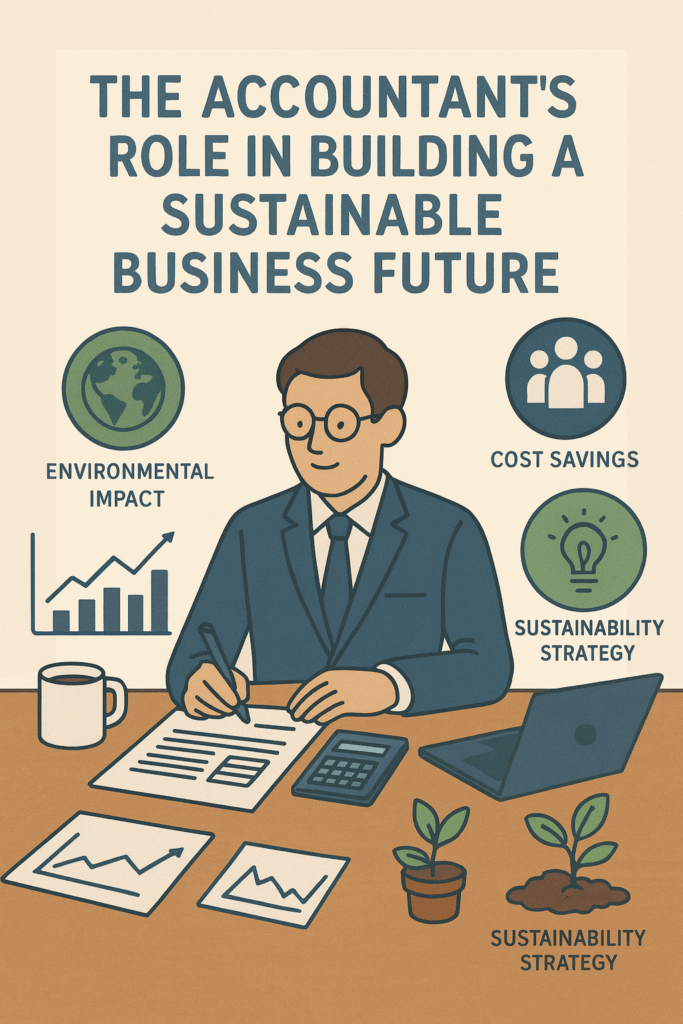
Sustainability used to sit on the sidelines of business strategy — a “we’ll get to it when we can” kind of thing. But not anymore. Today, sustainability affects everything from customer choices to investment decisions, and businesses of all sizes are expected to show they’re thinking long-term, not just quarter-to-quarter. And right at the heart of this shift?Accountants. The unsung heroes who turn sustainability from a nice idea into measurable, trackable, strategic action. 🌿 Why Accountants Are the New Sustainability Champions Accountants already live in a world of numbers, transparency, accountability, and long-term planning — which also happens to be exactly what sustainability requires. They sit in the perfect spot to help businesses understand: What sustainability costs What sustainability saves And what sustainability creates Whether it’s reducing waste, lowering carbon impact, or improving efficiency, an accountant is the person who can turn goals into achievable, financially realistic plans. 📊 1. Measuring the Impact That Matters You can’t manage what you don’t measure — and sustainability is full of metrics that need expert interpretation. Accountants help businesses track: Energy use and cost Waste and recycling performance Carbon footprint Water usage Supply chain sustainability Staff wellbeing and training investment And most importantly, they connect those metrics back to financial outcomes. 🧾 2. Integrating ESG Into Financial Reporting Environmental, Social, and Governance (ESG) reporting is becoming standard practice. Accountants are the ones who: Prepare ESG disclosures Ensure transparency and accuracy Integrate non-financial metrics with financial results Help SMEs meet expectations from suppliers and regulators This means sustainability becomes part of the financial story — not an afterthought. 💡 3. Spotting Opportunities for Cost Savings A sustainable business is often an efficient business. Accountants can identify opportunities such as: Lower energy bills through efficiency upgrades Reduced paper and printing costs Waste-reduction savings Tax incentives for green investment Better financial planning through long-term sustainability forecasting Sometimes the biggest sustainability wins start with the smallest operational tweaks — and accountants are the ones who spot them. 🌍 4. Strategic Planning for a Low-Carbon Future Businesses are facing new pressures: Net-zero targets Carbon taxes Investor expectations Customer demand for green practices Accountants guide businesses through these challenges by offering: Future-proof financial strategies Scenario planning Risk assessment and mitigation Advice on sustainable investment decisions They turn “what if?” into “here’s the plan.” 🪴 5. Championing a Sustainability-Led Culture Numbers alone don’t change a business — people do. Accountants often act as trusted advisors, meaning they can: Encourage leadership to adopt greener practices Build sustainability into KPIs Help staff understand the financial value of sustainable behaviour Demonstrate how environmental responsibility supports profitability They’re not just number-crunchers — they’re influencers. 🏆 A Sustainable Future Needs Financial Leadership As sustainability becomes core to business success, accountants are becoming essential drivers of change. Their expertise helps companies balance responsibility with profitability — creating organisations that are strong, efficient, ethical, and built for the long run. The future of business is sustainable.And accountants are the ones helping to build it.
ESG Reporting: What It Means for Small Businesses
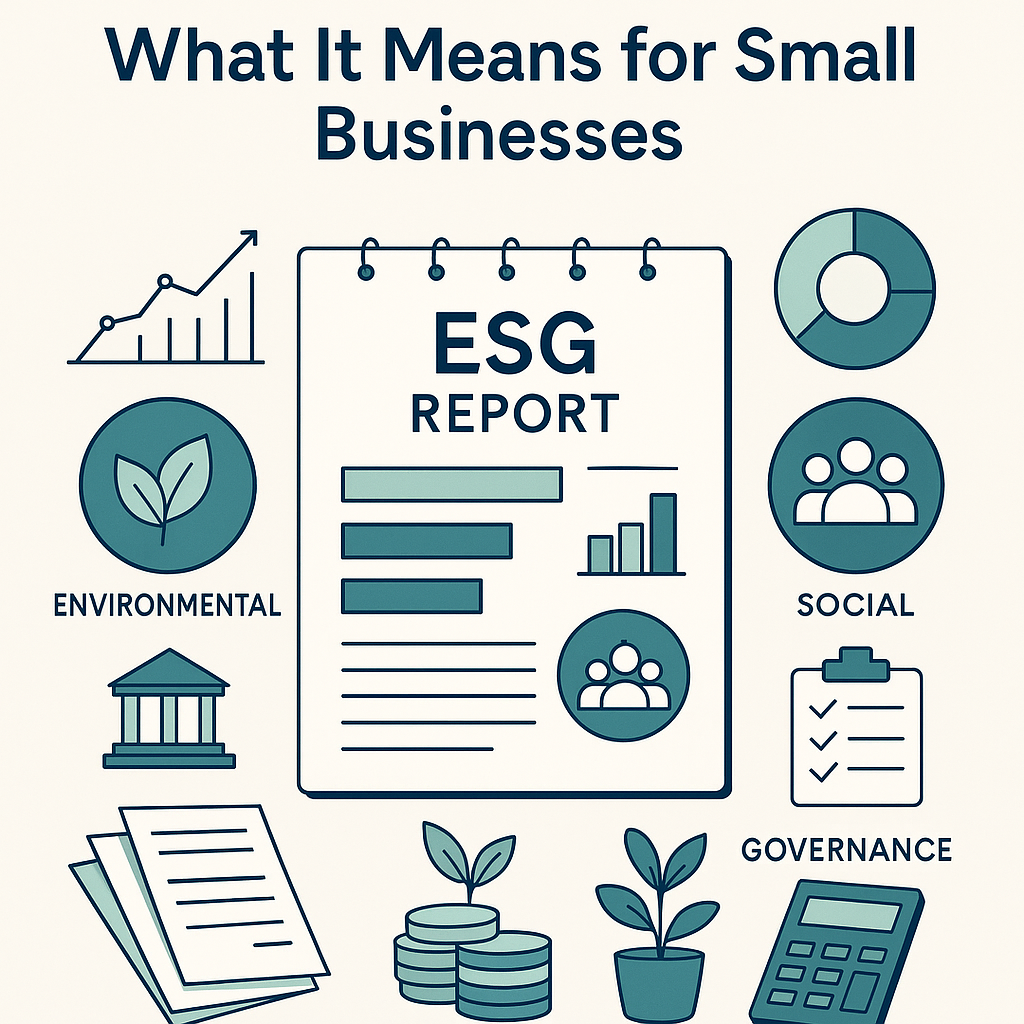
Environmental, Social and Governance (ESG) reporting has quickly moved from a “big business thing” to something small businesses can’t afford to ignore. Once seen as optional, ESG is now shaping investor decisions, supply-chain requirements, consumer behaviour, and even recruitment. For clients of Clarus Accountancy Group, understanding ESG isn’t just about compliance — it’s about staying competitive in a market where transparency and sustainability matter more than ever. 🌍 What Exactly Is ESG Reporting? ESG reporting gives stakeholders a clearer view of how a business behaves beyond its financial statements. It covers: E — Environmental Energy use, waste management, carbon footprint, recycling, pollution control. S — Social Employee wellbeing, diversity, community impact, customer relationships, training or safeguarding measures. G — Governance Leadership structure, policies, data protection, ethics, risk management, anti-corruption practices. In short, ESG tells the story of how responsibly and sustainably a business operates. 📌 Why Small Businesses Should Care Even if a small business isn’t legally required to produce an ESG report yet, many are feeling pressure from: 1. Supply Chain Requirements Large companies increasingly require their suppliers — including SMEs — to demonstrate ESG performance. 2. Access to Finance Banks and lenders are already adding ESG criteria into risk assessments. Strong ESG = better finance terms. 3. Customer Expectations Consumers (especially younger ones) reward businesses that operate ethically and sustainably. 4. Recruitment & Retention ESG-led companies attract talent that care about values, not just paychecks. 5. Future-Proofing Regulations are shifting toward sustainability. Early adopters will find compliance easier — and cheaper — later. 📊 What Goes Into an ESG Report for a Small Business? Small businesses don’t need complicated frameworks.Clarus Accountancy Group can guide clients through simple, meaningful metrics such as: Environmental Metrics Energy consumption Waste reduction Paperless processes Sustainable procurement Carbon-reduction initiatives (e.g., EVs, LED lighting) Social Metrics Staff training Health & safety practices Diversity initiatives Community involvement Customer satisfaction measures Governance Metrics Policies and procedures Clear organisational structure Cybersecurity Data protection (GDPR) Ethical behaviour and compliance Clarus can help SMEs turn these into practical, easy-to-understand reports that demonstrate good governance and sustainability. 🏆 How ESG Benefits Small Businesses For SMEs supported by Clarus Accountancy Group, ESG reporting can: Improve brand trust and credibility Open doors to grants and greener finance Strengthen relationships with eco-conscious customers Reduce energy and waste costs Boost staff morale and retention Enhance long-term resilience and value This is not just a reporting exercise — it’s a smarter way to run a business. 🔮 ESG and the Future of Small Business As the UK moves further toward net-zero targets, ESG will become a normal part of business reporting, even for small organisations. The good news? SMEs who start now gain a serious competitive advantage.And with expert guidance from Clarus Accountancy Group, ESG reporting becomes manageable, meaningful, and genuinely beneficial. ✅ SEO Information Primary Keyword: ESG reporting for small businesses Secondary Keywords: SME sustainability ESG compliance UK small business governance environmental reporting for SMEs Clarus Accountancy Group sustainability ESG benefits for small businesses
Green Accounting: Measuring the True Cost of Sustainability
Sustainability isn’t just a buzzword anymore — it’s a business reality. Companies are under growing pressure from regulators, investors, and customers to show that they’re not only profitable, but responsible. That’s where green accounting steps in. It’s the quiet but powerful shift that helps organisations understand the real cost of doing business, beyond pounds and pence. 🌱 What Is Green Accounting? Green accounting (sometimes called environmental accounting) is a framework that incorporates environmental costs and benefits into financial reporting.Instead of looking only at sales, expenses, and net profit, it asks: How much is pollution costing us? What’s the economic value of reducing waste? How does a switch to renewable energy affect long-term financial health? Are we considering the future cost of today’s environmental decisions? It basically widens the lens: profits matter, but so does the planet. 💸 Why Traditional Accounting Falls Short Traditional accounting treats environmental harm like a side note — if it acknowledges it at all. For example: If a factory pollutes a river, cleanup costs might fall on the community, not the company. If a business saves energy, the benefit is seen only on the utility bill, not in its broader sustainability impact. Long-term risks like carbon taxes or climate-related insurance spikes are often invisible on the balance sheet. Green accounting fills these gaps by recognising environmental effects as genuine economic factors. 🌍 What Green Accounting Actually Measures Here are some of the core components: 1. Environmental Costs These include things like waste disposal, carbon emissions, energy use, and environmental compliance.It shows businesses what their activities really cost when the environment is part of the equation. 2. Resource Valuation How much were natural resources worth before your business used them?Green accounting assigns value to things like water, timber, minerals, and ecosystems. 3. Environmental Liabilities Think future carbon taxes, pollution penalties, or remediation expenses.Forecasting these costs helps businesses make smarter long-term decisions. 4. Environmental Assets These are investments that actually improve sustainability — things like solar panels, greener supply chains, or efficient machinery. 📊 How Green Accounting Helps Businesses It’s not just about being ethical — it’s also good business. – Better strategic decisions You can see the long-term financial impact of sustainability efforts (like renewable energy or waste reduction). – Improved brand reputation Customers care. Investors care. Transparency builds trust. – Cost savings Energy efficiency and waste reduction often save money faster than companies expect. – Stronger compliance and risk management Environmental regulations are tightening. Companies that prepare early avoid nasty surprises. 🔮 The Future: Sustainability as Standard Practice As ESG reporting becomes the norm and governments get stricter about environmental impact, green accounting will shift from “nice-to-have” to mandatory. Businesses that adopt these practices now will be miles ahead — financially and ethically. Green accounting doesn’t just measure sustainability.It builds it.