Environmental, Social and Governance (ESG) reporting has quickly moved from a “big business thing” to something small businesses can’t afford to ignore. Once seen as optional, ESG is now shaping investor decisions, supply-chain requirements, consumer behaviour, and even recruitment.
For clients of Clarus Accountancy Group, understanding ESG isn’t just about compliance — it’s about staying competitive in a market where transparency and sustainability matter more than ever.
🌍 What Exactly Is ESG Reporting?
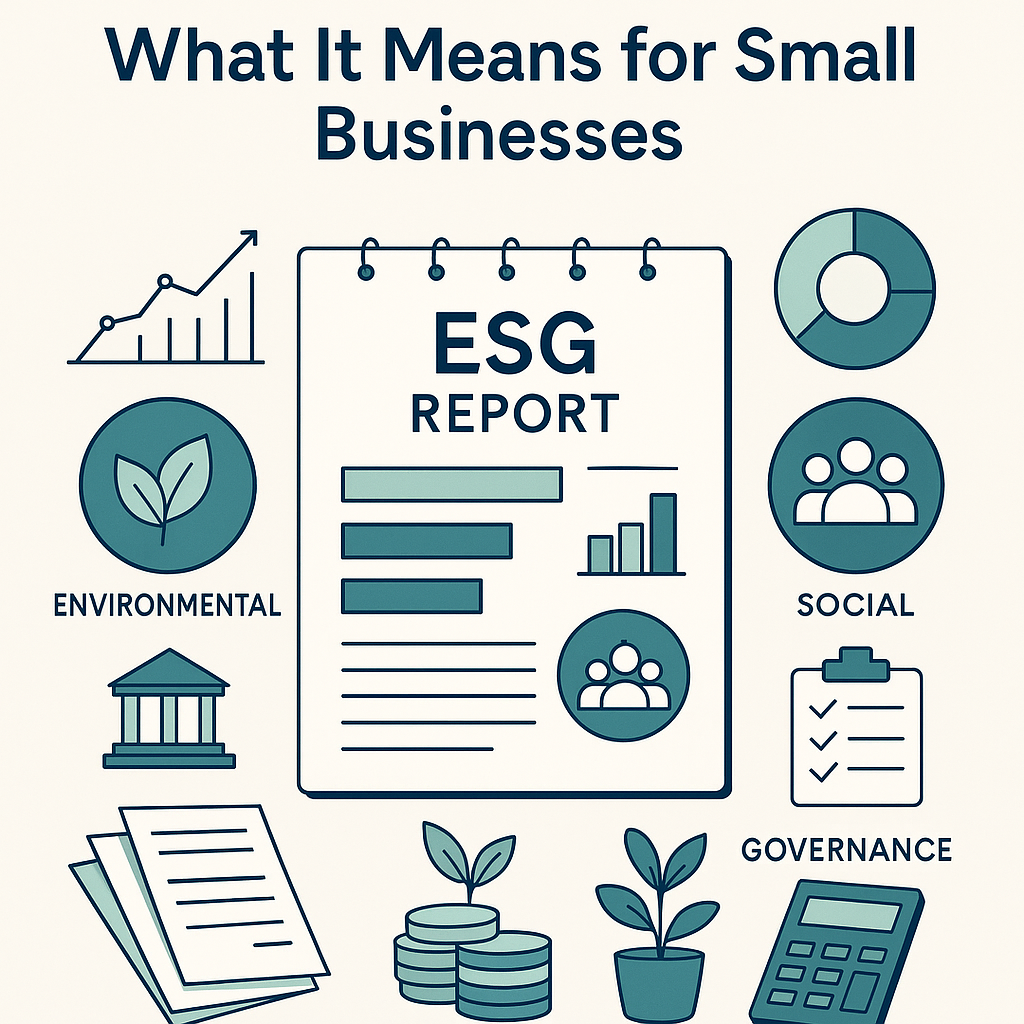
ESG reporting gives stakeholders a clearer view of how a business behaves beyond its financial statements. It covers:
E — Environmental
Energy use, waste management, carbon footprint, recycling, pollution control.
S — Social
Employee wellbeing, diversity, community impact, customer relationships, training or safeguarding measures.
G — Governance
Leadership structure, policies, data protection, ethics, risk management, anti-corruption practices.
In short, ESG tells the story of how responsibly and sustainably a business operates.
📌 Why Small Businesses Should Care
Even if a small business isn’t legally required to produce an ESG report yet, many are feeling pressure from:
1. Supply Chain Requirements
Large companies increasingly require their suppliers — including SMEs — to demonstrate ESG performance.
2. Access to Finance
Banks and lenders are already adding ESG criteria into risk assessments. Strong ESG = better finance terms.
3. Customer Expectations
Consumers (especially younger ones) reward businesses that operate ethically and sustainably.
4. Recruitment & Retention
ESG-led companies attract talent that care about values, not just paychecks.
5. Future-Proofing
Regulations are shifting toward sustainability. Early adopters will find compliance easier — and cheaper — later.
📊 What Goes Into an ESG Report for a Small Business?
Small businesses don’t need complicated frameworks.
Clarus Accountancy Group can guide clients through simple, meaningful metrics such as:
Environmental Metrics
Energy consumption
Waste reduction
Paperless processes
Sustainable procurement
Carbon-reduction initiatives (e.g., EVs, LED lighting)
Social Metrics
Staff training
Health & safety practices
Diversity initiatives
Community involvement
Customer satisfaction measures
Governance Metrics
Policies and procedures
Clear organisational structure
Cybersecurity
Data protection (GDPR)
Ethical behaviour and compliance
Clarus can help SMEs turn these into practical, easy-to-understand reports that demonstrate good governance and sustainability.
🏆 How ESG Benefits Small Businesses
For SMEs supported by Clarus Accountancy Group, ESG reporting can:
Improve brand trust and credibility
Open doors to grants and greener finance
Strengthen relationships with eco-conscious customers
Reduce energy and waste costs
Boost staff morale and retention
Enhance long-term resilience and value
This is not just a reporting exercise — it’s a smarter way to run a business.
🔮 ESG and the Future of Small Business
As the UK moves further toward net-zero targets, ESG will become a normal part of business reporting, even for small organisations.
The good news? SMEs who start now gain a serious competitive advantage.
And with expert guidance from Clarus Accountancy Group, ESG reporting becomes manageable, meaningful, and genuinely beneficial.
✅ SEO Information
Primary Keyword:
ESG reporting for small businesses
Secondary Keywords:
SME sustainability
ESG compliance UK
small business governance
environmental reporting for SMEs
Clarus Accountancy Group sustainability
ESG benefits for small businesses