Why Cash Flow Matters—and How to Improve It Immediately

Cash flow is the lifeblood of every business. You can be profitable on paper and still struggle to survive if cash isn’t flowing when your business needs it. From paying suppliers to funding growth, positive cash flow determines whether your business can operate smoothly—or face unnecessary financial stress. At Clarus Accountancy Group, we help small businesses understand, control, and optimise their cash flow so they can grow with confidence. Here’s why cash flow matters—and the steps you can take to improve it immediately. 1. Cash Flow Determines Your Business’s Financial Health Profit is important, but cash flow is what keeps your business operating day to day. Healthy cash flow ensures you can: Pay suppliers on time Cover payroll and tax obligations Invest in new opportunities Avoid costly emergency loans Weather seasonal dips or unexpected expenses Without strong cash flow, even successful businesses can become vulnerable. 2. Cash Flow Problems Are the #1 Cause of Business Failure Research consistently shows that poor cash flow—not poor sales—is the leading cause of business collapse. Common causes include: Late customer payments Excess stock sitting unsold Rising operating costs Inaccurate forecasting Poor financial management Clarus works with SMEs to identify and resolve these issues early, before they impact business stability. 3. Understanding Cash Flow Helps You Make Smarter Decisions With clear cash flow insight, you can make better choices about: Hiring staff Purchasing equipment Expanding operations Taking on new contracts Managing credit terms When you understand cash flow, you: ✔ Make decisions confidently✔ Avoid unnecessary risk✔ Plan growth without guesswork 4. How to Improve Cash Flow Immediately Here are practical steps any small business can take—starting today. A. Invoice Faster and Automate Payments Slow invoicing = slow cash flow. Improve speed by: Sending invoices immediately Using cloud accounting for automatic invoicing Offering online payment options Automating reminders for overdue invoices This alone can dramatically improve cash flow within weeks. B. Encourage Faster Customer Payments Customers pay faster when it’s easy for them. Try offering: Small discounts for early payment Online card payments Direct debit options Clear payment terms on every invoice C. Review and Reduce Unnecessary Costs Every small saving contributes to healthier cash flow. Assess: Subscriptions you no longer use Suppliers with increasing prices Equipment leases vs. buying Inefficient processes costing time Clarus can help you run a cost-control review that protects your profit margins. D. Improve Stock and Inventory Management Too much inventory = cash trapped on shelves. Reduce stock levels by: Forecasting demand more accurately Switching to just-in-time ordering Clearing old stock Negotiating flexible supply terms E. Negotiate Better Payment Terms If customers pay late but suppliers want early payment, cash flow suffers. Consider: Extending supplier payment terms Reducing customer credit periods Aligning payment cycles with cash inflows F. Build a 3–6 Month Cash Buffer Even a small reserve can protect your business against unexpected costs. This gives you:✔ Stability✔ Security✔ Room for growth Clarus can help you create a cash reserve plan tailored to your business. 5. Cash Flow Forecasting: The Most Powerful Tool You’re Not Using A cash flow forecast is a forward-looking view of your financial position. It helps you see: Future cash shortages When to invest When to cut costs When additional funding is needed Businesses with accurate forecasts grow significantly faster than those without. ⭐ Final Thoughts Cash flow doesn’t have to be complicated—but it must be managed proactively. With expert guidance, automated tools, and smart forecasting, your business can improve cash flow quickly and build long-term financial strength. Clarus Accountancy Group supports small businesses with cash flow management, forecasting, and practical strategies that create financial stability and unlock growth.
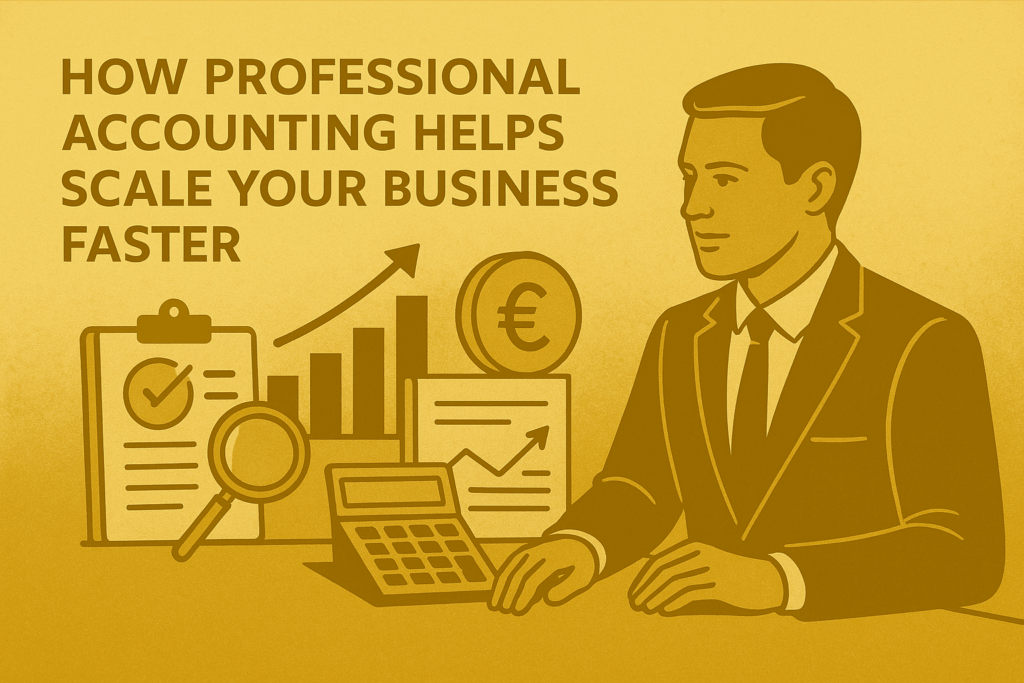
How Professional Accounting Helps Scale Your Business Faster
Growing a business is exciting—but scaling sustainably requires more than ambition. It demands visibility, financial clarity, accurate forecasting, and strategic decision-making. This is where professional accounting becomes one of the most powerful growth drivers for small and medium-sized businesses. At Clarus Accountancy Group, we help business owners move beyond reactive bookkeeping into proactive financial management. Here’s how professional accounting accelerates growth and supports long-term scalability. 1. Better Financial Visibility for Smarter Decisions You can’t scale what you can’t measure.Professional accounting gives you clear, real-time insight into: Revenue performance Cash flow trends Profit margins Operating costs Financial risks This level of visibility helps you make informed, strategic decisions rather than reactive ones. How it accelerates growth: ✔ You can identify profitable revenue streams✔ You can eliminate wasteful spending✔ You can confidently invest in new opportunities 2. Strong Cash Flow Management Cash flow problems are the number one reason small businesses fail to scale.With expert accounting, you can: Predict upcoming cash shortages Forecast future cash requirements Ensure invoices are paid on time Plan major purchases Avoid unnecessary borrowing How it accelerates growth: ✔ You maintain financial stability✔ You avoid cash “surprises”✔ You can reinvest in the business at the right time 3. Tax Efficiency That Frees Up More Capital Professional accountants ensure you only pay the tax you owe—nothing more. Clarus helps businesses: Claim every allowable expense Maximise capital allowances Structure director salary/dividends tax-efficiently Access reliefs such as R&D, AIA and creative industry credits Avoid penalties and interest How it accelerates growth: ✔ More retained profit✔ More cash to reinvest✔ Lower financial risk 4. Accurate Forecasting & Budget Planning Scaling requires planning—not guessing. With professional forecasting, you can: Model different growth scenarios Plan for hiring Predict equipment or property needs Understand long-term profitability Build confidence in investment decisions How it accelerates growth: ✔ You know when you can afford to scale✔ You can pitch to investors with confidence✔ You can set measurable targets 5. Helping You Secure Funding Faster Banks and investors need solid, credible financial information.Professional accountants provide: Clean year-end accounts Management reports Cash flow forecasts Business plans and projections Debt and equity guidance How it accelerates growth: ✔ Better chance of loan approval✔ Stronger investor confidence✔ Faster access to capital 6. Streamlined Systems That Save Time Cloud accounting solutions like Xero, QuickBooks, and FreeAgent automate tasks such as: Invoicing Bank reconciliation Expenses VAT returns Payroll How it accelerates growth: ✔ Less admin work✔ Real-time financial data✔ More time to focus on customers and sales 7. Compliance & Risk Reduction Compliance mistakes slow growth, cause stress, and risk penalties. Professional accounting protects your business from: HMRC penalties Incorrect VAT reporting Mismanaged payroll Director loan issues Poor record-keeping How it accelerates growth: ✔ You avoid costly problems✔ You protect your reputation✔ You build a scalable, compliant foundation ⭐ Final Thoughts Professional accounting isn’t just a cost—it’s a strategic investment in faster, safer, and more sustainable business growth. Whether you’re planning to hire, expand, raise finance, or simply improve profitability, the right financial guidance can transform the trajectory of your business. Clarus Accountancy Group provides expert accounting that helps small businesses scale with confidence, clarity, and control.
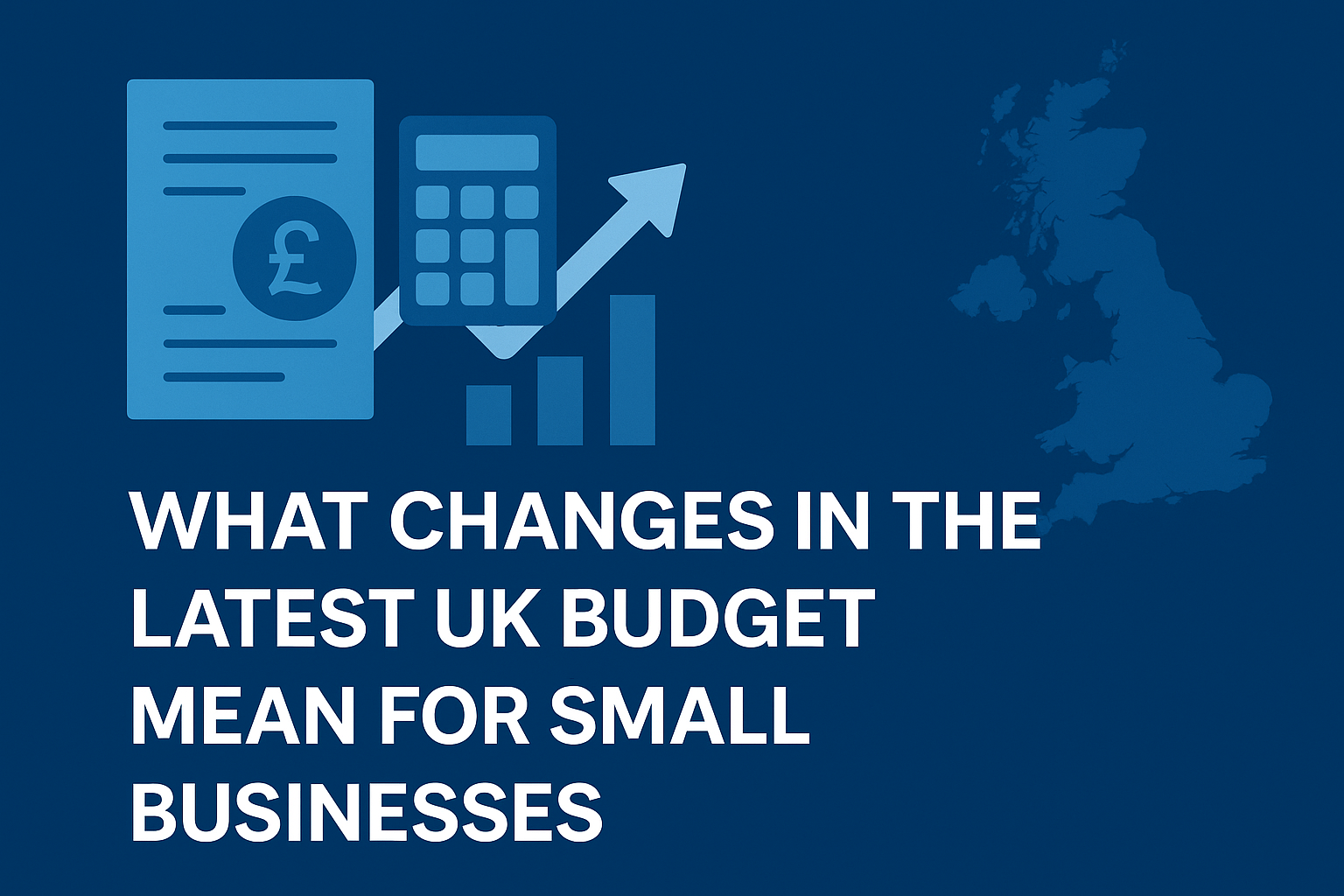
What Changes in the Latest UK Budget Mean for Small Businesses
The UK’s upcoming Autumn Budget 2025, expected on 26 November, is set to bring a number of shifts that could significantly affect small and medium-sized enterprises (SMEs). Grant Thornton UK+2Debitam+2 At Clarus Accountancy Group, we believe that being ahead of these changes is one of the most important strategic moves a small business owner can make. Here are the key areas you should be watching—and how your business might respond. 1. VAT & Registration Thresholds One of the areas anticipated to see change is the VAT regime for small businesses. Experts suggest that while the headline VAT rate is unlikely to rise, the registration threshold may remain frozen, meaning more businesses will cross the threshold and become VAT-liable. White Oak UK+1What you should do: Review your rolling 12-month turnover to check whether you’re approaching the threshold. Update your bookkeeping and identify whether becoming VAT-registered is beneficial rather than a burden. Speak with Clarus about how VAT registration might impact your pricing, systems and cash-flow. 2. Business Rates Reform Small businesses, especially in retail, hospitality and high-street sectors, are facing reforms to business rates. The government is reportedly looking at “removing cliff-edges” and making reliefs more stable. Reuters+1What you should do: If you occupy premises, review your rateable value and relief eligibility now. Forecast any increases in business rates as part of your budget for next year. Clarus can help you model the impact and plan accordingly. 3. Payroll and Employment Costs With wage inflation, national insurance and minimum wage rises, many small businesses are expecting cost pressures. These changes were flagged ahead of the Budget. White Oak UK+1What you should do: Review your staffing, payroll forecasts, and benefit costs. Consider whether automation or outsourcing (e.g., payroll service) could reduce admin overheads. Speak with Clarus about structuring remuneration (including director salaries/dividends if you’re a limited company) to manage cost. 4. Tax Reliefs & Incentives Budget changes often include adjustments to reliefs, allowances or investment incentives. Although specifics are still to be confirmed, small businesses should prepare. Grant Thornton UKWhat you should do: Review upcoming capital expenditure plans—consider bringing forward asset purchases if that remains tax-efficient. Check whether you’re claiming all applicable reliefs (R&D, investment allowance, etc.). Clarus can review your business’s eligibility for these reliefs and plan ahead. 5. Administrative & Compliance Burdens Ahead of the Budget, a key theme has been reducing red-tape for businesses. For example, the government has signalled a “blitz on bureaucracy” for small firms. The GuardianWhat you should do: Audit your business processes: could you reduce manual entries, streamline bookkeeping or adopt cloud accounting? Ensure your systems are up to scratch—this helps you respond quickly to regulatory changes. Clarus can support you in moving to cloud accounting and improving your internal controls. Final Thoughts The Autumn Budget 2025 may not yet have full details of every measure, but the broad themes are clear: more scrutiny on tax thresholds, cost pressures on employment, reforms to business rates, and a push for greater efficiency in business operations.For small businesses, being proactive is vital: review your financial forecasts, tighten your systems, and seek expert advice now. Clarus Accountancy Group is here to support you every step of the way—from modelling budget impacts to adjusting your business structure and accounting practices.
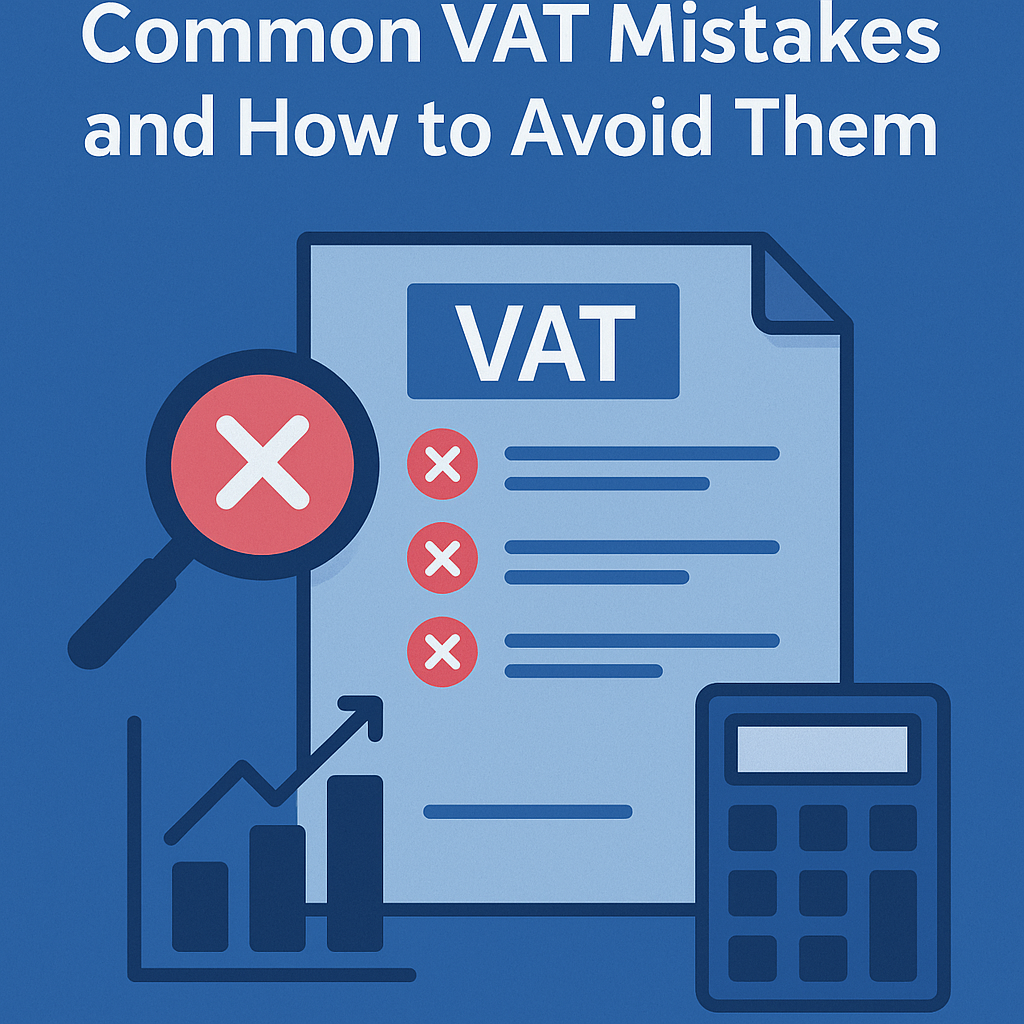
Common VAT Mistakes
VAT is one of the most common areas where UK businesses make errors—and unfortunately, even a small mistake can lead to penalties, interest charges, or an HMRC investigation. Whether you’re a sole trader, limited company, or growing SME, understanding the most frequent VAT pitfalls can save time, money, and stress. At Clarus Accountancy Group, we help businesses maintain accurate VAT compliance and avoid costly errors. Here are the most common VAT mistakes—and how your business can prevent them. 1. Charging the Wrong VAT Rate The UK has multiple VAT rates, and choosing the wrong one is a frequent source of error. Typical mistakes include: Applying standard rate instead of reduced or zero rate Forgetting to apply VAT to digital services Misapplying VAT on construction or CIS-related work Charging VAT when your business is not yet registered ✔ How to avoid it: Check HMRC’s VAT rate guidelines for your industry Review products/services regularly for correct categorisation Use cloud accounting software with built-in VAT logic Let Clarus Accountancy review your VAT setup 2. Missing VAT Registration or Deregistration Thresholds If your taxable turnover exceeds £90,000 (current threshold), you must register for VAT.Many businesses forget to track this. Common mistakes: Not registering when you pass the threshold Failing to deregister when turnover falls below limit Incorrect estimated turnover forecasting ✔ How to avoid it: Monitor rolling 12-month sales (not your accounting year) Set automatic alerts in your accounting software Ask Clarus to monitor VAT thresholds for you 3. Claiming VAT on Non-Allowable Expenses Not all expenses qualify for VAT recovery. HMRC often rejects: Client entertainment Personal or mixed-use expenses Fuel without proper mileage logs Vehicles used privately International purchases with incorrect VAT treatment ✔ How to avoid it: Keep clear receipts Maintain vehicle mileage records Avoid claiming VAT on entertainment unless rules permit Let your accountant review ambiguous items 4. Errors in VAT Returns Incorrect VAT return figures are among the most common issues. Frequent errors: Duplicated invoices Missing receipts Incorrect box entries Misclassification of zero-rated or exempt sales Not applying reverse charge rules ✔ How to avoid it: Reconcile bank accounts monthly Match invoices to payments Use “check & review” workflows before submission Allow Clarus to prepare or review returns 5. Not Using the Correct VAT Scheme Choosing the wrong VAT scheme can increase admin or cost. Examples: Flat Rate Scheme not suitable Cash Accounting Scheme used incorrectly Annual Accounting Scheme not considered ✔ How to avoid it: Review schemes annually Assess whether a scheme could reduce your VAT bill Get advice from Clarus on the best scheme for your business 6. Late VAT Filing or Payment HMRC penalties can accumulate quickly. Late filing often happens because of: Poor bookkeeping Missing receipts Staff shortages Forgetting deadlines ✔ How to avoid it: Use accounting software reminders Keep books updated monthly Let Clarus handle VAT submissions directly 7. Incorrect VAT on International Sales Cross-border VAT rules are complex and often misunderstood. Mistakes include: Wrong VAT on EU sales Misapplied reverse charge Incorrect place-of-supply rules Missing import/export VAT documentation ✔ How to avoid it: Understand the difference between B2B and B2C VAT rules Apply reverse charge correctly Keep full documentation for imports/exports Seek advice for complex international transactions ⭐ Final Thoughts VAT can be one of the most difficult areas of UK tax compliance—but it doesn’t have to be. With the right systems, professional guidance, and regular checks, your business can avoid penalties and stay confidently compliant. Clarus Accountancy Group offers full VAT support, from registrations and returns to reviewing your VAT scheme and ensuring HMRC compliance. If you need help avoiding VAT mistakes or want your returns professionally managed, we’re here to support you.
How to Prepare for an HMRC Audit: A Practical Guide for SMEs
No business owner enjoys the thought of an HMRC audit—but with the right preparation, the process can be smooth, stress-free, and even beneficial. For many SMEs, an audit simply means HMRC needs to verify that tax returns and financial records are accurate. It does not automatically mean you have done something wrong. At Clarus Accountancy Group, we help businesses prepare for HMRC checks with confidence. This guide breaks down what to expect, how to prepare, and the steps you can take to ensure compliance. What Is an HMRC Audit? An HMRC audit (also called an “HMRC compliance check”) is a formal review of your tax affairs. HMRC may examine: Corporation Tax VAT returns PAYE and payroll Self-assessment returns Business records and bookkeeping Directors’ expenses and dividends Audits may be random, or triggered by specific risk factors such as unusual expenses, inconsistent figures, late filings, or industry-specific compliance issues. 1. Understand Why HMRC Might Contact You HMRC can initiate an audit for several reasons: Common triggers include: Large fluctuations in turnover or expenses Repeated late submissions Missing, incorrect, or inconsistent data High-risk industries (e.g., construction, hospitality) Discrepancies flagged by automated systems Reports from third parties Clarus can help identify potential risk areas before HMRC does. 2. Gather and Organise Your Financial Records The first step in preparing for an audit is ensuring all documentation is accurate and complete. Make sure you have: Full bookkeeping records Sales and purchase invoices Bank statements and reconciliations Payroll records and PAYE submissions VAT records (if registered) Expense receipts Director loan documentation Dividend records and board minutes Cloud accounting software like Xero or QuickBooks makes this much easier and reduces the chance of errors. 3. Review Your Tax Returns for Accuracy Before providing anything to HMRC, double-check all relevant tax returns. Check for: Missing entries Duplicated transactions Unclear descriptions Inconsistent VAT treatment Incorrect expense claims Misreported payroll figures A quick review can prevent small mistakes from becoming bigger issues during the audit. 4. Ensure Your Expense Claims Are Justified HMRC will likely scrutinise business expenses, especially those that may appear “personal.” Make sure expenses are: Wholly and exclusively for business purposes Supported by receipts Clearly categorised Reasonable and consistent Common areas HMRC questions include: Travel and subsistence Home office claims Vehicle expenses Entertainment Director purchases Clarus can help you ensure these are compliant. 5. Check Your VAT Records (If Applicable) VAT inspections are among the most common audits. Ensure: VAT has been applied correctly Partial exemption rules are followed (if relevant) VAT on imports/exports is recorded properly VAT returns match your bookkeeping reports Mistakes in VAT can lead to penalties—so this is an essential review. 6. Review Payroll & PAYE Compliance If you employ staff, HMRC will expect clean, accurate payroll records. Verify that you have: Submitted all RTI (Real Time Information) filings Calculated PAYE and NI correctly Issued P60 and P45 forms Managed employee benefits (P11D) correctly Maintained up-to-date employee records Clarus offers full payroll management if you need hands-off support. 7. Understand What HMRC Will Ask For When HMRC initiates an audit, they will send you a letter explaining what they need. This might include: Specific tax returns Detailed accounts Supporting evidence A face-to-face meeting A meeting at your accountant’s office You have the right to have your accountant communicate with HMRC on your behalf. 8. Cooperate Professionally—but Don’t Overshare Provide exactly what HMRC requests—no more, no less. Do: ✔ Respond promptly✔ Communicate through your accountant✔ Keep records organised✔ Ask for clarification if unclear Don’t: ✘ Offer additional data not requested✘ Guess or estimate figures✘ Delay responses without explanation Clarus can help manage the communication to ensure it stays on track. 9. Minimise Stress by Using Professional Representation An HMRC audit is much easier with an accountant by your side. Clarus can: Communicate directly with HMRC Provide requested records Ensure compliance Correct errors where needed Negotiate penalties (if applicable) Represent you during meetings Professional representation often leads to faster resolutions and fewer complications. 10. Learn From the Audit and Strengthen Your Processes Once the audit is complete, HMRC may: Close the review with no changes Request adjustments Apply interest or penalties (in more serious cases) Use the outcome as a chance to improve your financial systems. Clarus can help you: Strengthen bookkeeping Improve record keeping Automate compliance tasks Implement cloud systems Reduce future audit risk ⭐ Final Thoughts An HMRC audit doesn’t need to be intimidating. With proper preparation, accurate records, and professional support, you can manage the process smoothly and confidently. Clarus Accountancy Group works with SMEs across the UK to ensure compliance, reduce risk, and handle HMRC checks on your behalf—so you can stay focused on running your business.
Your Essential Year-End Tax Checklist for UK Businesses | Clarus Accountancy Group
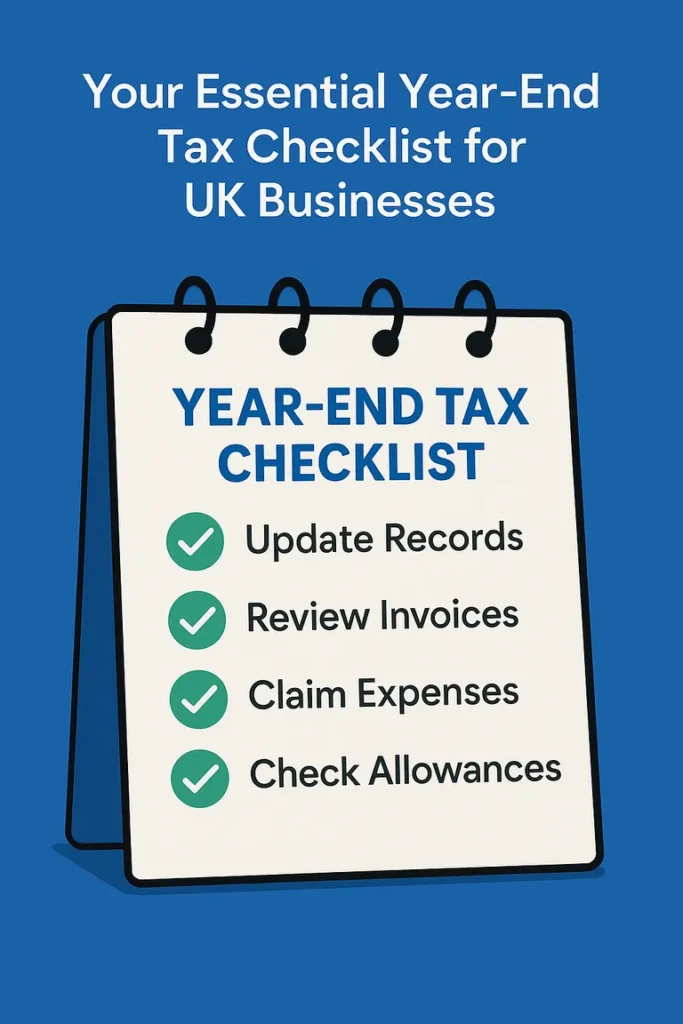
As the end of the financial year approaches, many business owners begin to feel the pressure of tax deadlines, reporting requirements, and financial housekeeping. At Clarus Accountancy Group, we help UK businesses stay compliant, reduce tax liabilities, and make smarter financial decisions through proactive planning—not last-minute panic. Use this essential year-end tax checklist to stay organised, minimise tax, and enter the new financial year with confidence. 1. Bring Your Bookkeeping Fully Up to Date Clear, accurate records are the foundation of a smooth year-end. Make sure you have: Reconciled all business bank accounts and payment platforms Logged all invoices, bills and receipts Updated expense claims, mileage logs and cash transactions Reviewed payroll reports and staff records If you’re using cloud accounting software like Xero, QuickBooks, or FreeAgent, now is the time to tidy up outstanding balances and correct any discrepancies. 2. Review Outstanding Invoices and Supplier Payments Outstanding invoices can distort your true financial position. Check for: Customers with overdue payments Any debts that should be written off Unprocessed supplier bills Duplicate or incorrect entries Effective credit control improves cash flow—and may reduce your year-end tax bill. 3. Claim All Allowable Business Expenses Many UK businesses lose money each year simply by failing to claim legitimate expenses. Don’t forget: Home office allowances Software, apps and subscription services Professional fees (accountancy, legal, memberships) Training and development Travel and subsistence Marketing and advertising If you’re unsure what you can claim, Clarus can review your spending and ensure you maximise all allowable deductions. 4. Make the Most of Year-End Tax Reliefs and Allowances Before the year closes, take advantage of available reliefs that can significantly reduce your tax bill. Key reliefs include: Annual Investment Allowance (AIA) – 100% relief on qualifying equipment R&D tax credits – even for non-technical businesses that innovate Capital allowances on vehicles, machinery and assets Employment Allowance (if eligible) Pension contributions for directors and employees The right planning can deliver substantial savings. Clarus can guide you through the options relevant to your business. 5. Review Director Salary, Dividends & Pension Strategy For limited companies, this is essential. Consider: Is your director salary tax-efficient? Should you issue dividends before the tax year ends? Are you maximising pension contribution allowances? A well-planned remuneration strategy ensures you pay only what you need to—nothing more. 6. Check Payroll Accuracy and Employee Benefits HMRC can impose penalties if payroll and reporting aren’t correct. Be sure to: Update employee details Reconcile PAYE, National Insurance and pension contributions Review P11D benefits such as vehicles or medical cover Ensure workplace pensions are correctly processed Clarus can manage your payroll to keep your business fully compliant, all year round. 7. Conduct a Stock Take (If Applicable) If your business holds stock, your year-end valuation must be accurate. Review: Slow-moving or obsolete stock Damaged goods Stock write-downs Physical inventory vs recorded inventory Correct stock valuation affects profits, tax liabilities, and financial reporting. 8. Review Cash Flow and Forecast Upcoming Tax Bills Year-end is the ideal moment to step back and assess your financial health. Consider: What tax payments are due in the next 6–12 months? What recurring costs will impact cash flow? Are there seasonal trends you need to factor in? Clarus offers forecasting support to help you plan ahead with clarity. 9. Evaluate Whether Your Business Structure Is Still Right Your current setup might not be the most tax-efficient. Ask yourself: Should I remain a sole trader or become a limited company? Should my business register for VAT (or deregister)? Do we need to restructure ownership or add directors? As your business evolves, your structure should evolve too. 10. Book a Year-End Review With Clarus Accountancy Group A professional review can uncover tax-saving opportunities you may not have spotted. During a year-end consultation, we: Ensure full HMRC compliance Identify tax reliefs and allowances Prepare year-end accounts and tax returns Create a personalised tax planning strategy Support you with bookkeeping, payroll, and VAT Our goal is simple: give you clarity, confidence, and more time to grow your business.
How to Generate Extra Passive Income

If you’ve ever wondered if it’s possible to make money whilst you’re asleep – we have good news. It is. Known as ‘passive income’ it can seem a bit too good to be true, but it is entirely possible – you just need to find the right type of passive income that works for you. Whilst it’s often referred to as ‘easy money’, some types of passive income require a bit of hard work! It all depends on how much you want to make, and how much time you have to spare. We’ll take a look at some popular types of passive income, and how you pay tax on it. Types of passive income Here are some of the most popular types of passive income, some of which you can start today. Dropshipping Dropshipping is a popular way to earn passive income. It’s a type of ‘retail fulfilment method’ – which basically means a way of supplying goods to customers. Some popular dropshipping websites you may be familiar with are AliExpress and The Wholesaler UK. It can be a good side-earner because you don’t have to store the stock yourself. Once you get an order on your website, the rest is down to your manufacturer or supplier. In that respect, finding the right manufacturer to work with can make or break your business. They’re the ones handling it all from manufacturing to fulfilment, so you have very little control over the quality of the product or the shipping experience. A bad supplier can make it extremely difficult for you to attract customers – especially if you have to spend time issuing refunds or dealing with poor reviews. It’s well worth weighing up the pros and cons, and doing your research. Create online content More people than ever are content creating. Whether that be through YouTube, podcasting or posting on platforms such as TikTok. This is usually referred to as ‘influencing’ where you can make money by: Views and followers Affiliate links Paid partnership videos A gifted product or experience Ads, for example if you run a YouTube channel Influencing can feel like a full-time role, and less ‘passive’ than some of the other options. But many creators build their audience up slowly over time. There is huge potential to make it less passive. Let’s use GK Barry as an example. She began posting on TikTok in 2020 whilst completing a degree in film studies. Within a year of posting regular content, she surpassed 1 million followers and now hosts her own podcast. Influencing can be mentally tough, and the money you make can fluctuate, so it’s important if you do take it up full-time you save some of your earnings for both tax and living expenses. Affiliate marketing Affiliate marketing is another great way to make passive income. If you’re unfamiliar with it, it’s essentially where you promote a business’s products or services and receive commission for each sale or lead generated. In this instance, you’ll have your own affiliate link, where you may even offer exclusive discounts to your audience. Only partnering with businesses that align with your brand or audience is important. For instance, if you’re a finance influencer, promoting bookkeeping software may be a good call. Promoting vitamins may be a little off brand. There are also affiliate programs you can join – for instance Amazon Associates. This is a free programme where you can earn commission by promoting Amazon products on your website through your own affiliate link. But again, it’s important to only promote things that align with your brand. Renting out property (or your own place) This isn’t one you can start right away, but renting out your property or room could be a major source of passive income. Many people put their home on Airbnb whilst they’re on holiday, and some even rent out their spare room on a full-time basis. If you’re not comfortable with people in your space, and you have the budget, you could consider buying and renting out properties. This is a lot of work at first, but once you have tenants, it’ll begin to feel like more of a passive source of income. Print on-demand If you’re a creative, print on demand is a perfect way of earning passive income whilst showcasing your talents. It’s similar to dropshipping, because once you’ve created your design, a supplier will then produce and ship it. You can usually choose to display it on things like clothing, home décor, or even accessories. For example, let’s say you’ve made some art based on a popular TV show. You can have your artwork transported onto a t-shirt, mug, journal, or poster without taking a huge financial risk. Just make sure you’re not breaching any copyright or Intellectual Property rules! Sell things you make online (or re-sell goods you own) Opening up your own shop on Etsy or eBay is a great way to earn passive income. Whether you’re creating bespoke items, or you’re buying products to resell and make a profit. If you don’t have a business idea in mind, many people sell their old clothes on sites such as Vinted. Selling old items can be a bit of a grey area when it comes to tax. If you’re ever unsure – speak with an accountant for more advice. Read our guide Will I be Taxed if I Sell My Old Clothes Online? Open an ISA ISAs (Individual Savings Accounts) are one of the most accessible ways to earn tax-free income – if you have spare cash to put into one, of course! How you make money though, depends on the type of ISA you choose. For example, a Cash ISA lets you save money and earn tax-free interest, whereas a Stocks and Shares ISA allows you to invest in things like shares, funds, or bonds — and any profits or dividends you earn are tax-free. For example Let’s say you save £2,000 in a Cash ISA with an interest rate of 2%. You’d earn £40 in interest each year — and you
Sick Pay for the Self-Employed

Taking time off work for health reasons is worrying enough without adding financial pressure into the mix. Most people who work full or part time for an employer receive Statutory Sick Pay (SSP), but if you’re self-employed this unfortunately isn’t an option. The good news though is you may be able to claim other benefits whilst self-employed if you can’t work due to illness, injury, or disability. In this article we’ll go over what options are available to you. What sickness benefits can I claim if I’m self-employed? There are some sickness benefits you may be able to claim if you’re self-employed and struggling to work. A good place to start is the benefits section of the Gov.uk website as you’ll find the most up-to date information. We go into more detail below, but typical examples include: Employment and Support Allowance Personal Independence Payment (PIP) Universal Credit for self-employed people Employment and Support Allowance The Employment and Support Allowance (ESA) can be claimed by people who are self-employed, unemployed, classed as a student, or employed but not eligible for Statutory Sick Pay (SSP). Will I have to stop working? The good news for self-employed workers is that receiving ESA doesn’t have to mean putting your business on hold. If your illness allows you to continue work, but restricts or reduces your ability to do so, you may still be eligible. Am I eligible for the Employment and Support Allowance? To be eligible for Employment and Support Allowance (ESA) you must be younger than state pension age, older than 16, and have a ‘fit note’ from your doctor. If you already get Statutory Sick Pay or Jobseeker’s Allowance, you will not be able to get the Employment and Support Allowance at the same time. How do I apply for Employment and Support Allowance? You can apply online or via your local Jobcentre Plus. Part of the assessment process involves demonstrating you are unable to work because of your illness, injury, or disability. You might need to complete a Work Capability Assessment questionnaire, or have a medical assessment at an in-person appointment. If you have been diagnosed with a terminal illness, then you will not have to be assessed. Personal Independence Payment (PIP) PIP is a benefit paid to people who find it harder to get around, or who need extra care due to a long-term health condition or disability. It consists of two components: mobility, and daily living. The mobility component is intended to help with getting about, and the daily living element is for extra help with day-to-day activities such as washing or dressing. You can claim for PIP between the ages of 16 to 64, even if you are working. Read up on Personal Independence Payments and how to claim on Gov.uk/PIP Universal Credit for self-employed people You may be able to claim Universal Credit if you’re self-employed. This can help you meet your costs if you’re on a low income or looking to grow your business. To claim Universal Credit, you’ll need to show: Your main source of income is through self-employment You regularly work as self-employed You expect to make a profit You have records relating to your self-employed work, such as receipts, invoices, and accounts information The above evidence all shows you’re ‘gainfully self-employed’ which means you won’t be expected to look for additional work on top. Bear in mind though, it will be assumed you are earning roughly the same as someone in a similar employed job. This is usually based on what someone your age would earn if you received National Minimum Wage for the hours you work. This amount is known as the Minimum Income Floor (MIF). How does the Minimum Income Floor work? Universal Credit will not make up the difference if you earn under the Minimum Income Floor (MIF). This means you might need to top up your income with extra work if possible. However, if you earn over the Minimum Income Floor (MIF), your actual earnings will be used to work out your Universal Credit payment. If you only became self-employed recently, the Minimum Income Floor will not apply for 12 months so you will need to be able to prove you’re building your business and/or you have a fit note from your doctor explaining any illness or injury. As part of the process, you’ll be assigned a Work Coach who will guide you. If you are able to work at all around your illness, disability, or injury, you will need to report anything you earn to the Department for Work and Pensions each month. The Gov.uk website has all the information you need about universal credit and how to apply. See Gov.uk/universal-credit. What else can I do to protect myself? Unfortunately, we all have times when we get sick or hurt ourselves, but with the cost of living high, the thought of limited or no income when you’re self-employed can be terrifying. Wherever possible, it’s a good idea to build a safety net of funds which you can pay yourself if you ever can’t work. It’s definitely something to consider when deciding your pricing structure (which should also factor in you having some time off for holidays!). You might also consider hiring freelancers to help you fulfil any existing contracts or projects. Although there will be a cost involved, it may help to avoid disappointed customers. There are also different types of business insurance, like income protection insurance. Outside of your business, you could also think about critical illness cover (which can help if you have a mortgage, for example). Arming yourself with the facts and coming up with a plan ahead of time can make a huge difference to both your finances and your stress levels.
June 2025 Client of the Month: LemonTop Digital

We help drive long-term success for ambitious brands through organic growth methods in SEO to get you in front of your ideal customers when and where they’re searching for your offering. Hey Jack! Tell us about your business We help drive long-term success for ambitious brands through organic growth methods, specialising in SEO to get you in front of your ideal customers when and where they’re searching for your offering. We’ve recently launched our new platform, Compass, to allow SME’s to access expert-level SEO at a fraction of the cost of an agency. Compass is built specifically with small businesses in mind, who need the ability to grow profitably and all of the benefits that SEO provides more than anyone, yet it is often prohibitively expensive for them. The platform will walk you through creating the perfect SEO strategy for your business and then a guided step-by-step process to execute successfully in just a few hours each month. What drove you to start your business? Over the past few years paid advertising has become increasingly expensive and we were seeing lots of small-businesses struggling to scale profitably (or just make consistent sales) while managing cashflow and margins. Especially alongside increasing operating expenses from the inflationary environment, global shipping issues and rising unit costs. It was then that we wanted to help SMEs utilise the benefits of SEO and organic growth as we knew it could be the advertising platform that would offer them: Huge ROI due to the compounding nature of the results from SEO (cost stays roughly the same while results compound) The ability to scale without eating into their margins Getting in front of their ideal customers when and where they’re looking for their products or services High quality traffic to their website with high conversion rates So we set up LemonTop to do just that and have seen fantastic results for our clients and their performance metrics. What particular challenges did you have to overcome in setting up your business, and since then? Launching the platform (Compass) has been a long road to ensure it met all of our requirements to be able to successfully help small-businesses gain the results we knew were available to those that can focus on their SEO. Another significant focus has been educating our clients and the market about the importance and intricacies of SEO and it’s positive impacts on their metrics over-time. Most are far more aware of paid-advertising and know the instant nature of it driving sales, but it won’t show immediately in the numbers how they can be making more sales but actually doing so unprofitably and in a way that won’t be scalable over a number of months. SEO works differently and can take a little longer to start seeing the results in the numbers, but can have the positive impact that everyone is looking for on reducing customer-acquisition costs, boosted revenue, increased profit, high-intent traffic and average order value to name just a few effects. But the education piece in the interim is a focus to ensure our clients are looking at the right metrics and understanding the nature of SEO. Why did you choose The Accountancy Partnership? We decided to work with The Accountancy Partnership after seeing their reputation for providing high-quality, reliable accounting services. Renowned for their client-centric approach, tailored to the unique needs of each client gave me the confidence that they would act as a partner rather than a distant third-party as accountancy firms can often be. The firm’s competitive pricing without compromising on the quality, has been exactly what we were looking for when we got started. Have we helped you overcome any challenges, and if so, how? Every time I have a question on some specifics related to our business they are quick to respond and answer with the detail necessary for us to be able to make well-informed decisions. What do you have planned for your business in the future? The big one which is coming this week is the launch of Compass, our guided SEO platform built for small businesses. It will be the all-in-one SEO solution for anyone to be able to achieve organic growth in just a few hours by simply following the steps of the platform. We’re super excited to be able to bring all of the benefits of SEO/organic growth to those that need to be able scale profitably the most and looking forward to seeing those results help them grow!