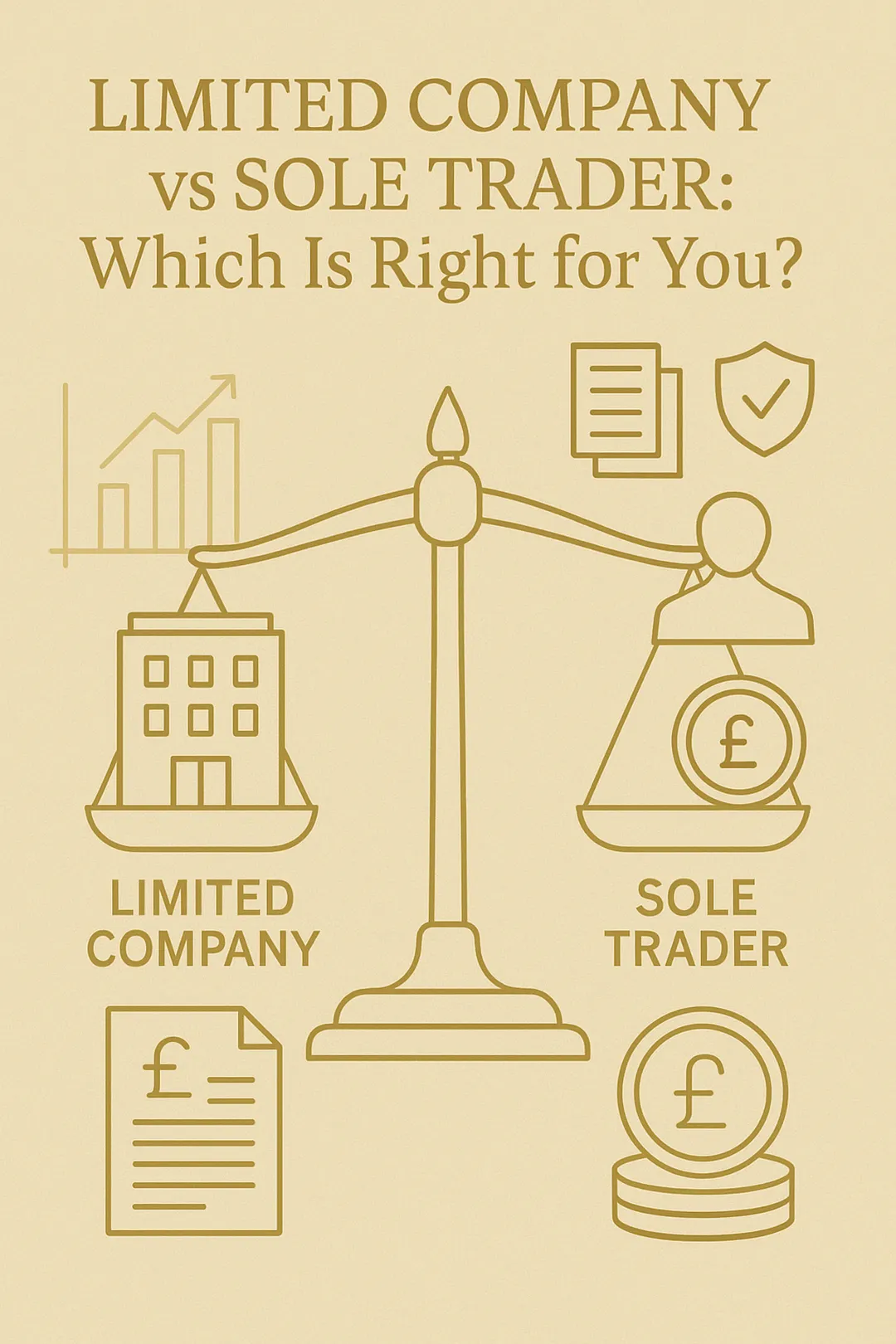
Choosing the right business structure is one of the most important decisions you’ll make as a business owner. It affects everything—from how much tax you pay to how protected you are legally. The two most common options in the UK are sole trader and limited company, each with its own advantages and responsibilities.
At Clarus Accountancy Group, we help entrepreneurs, freelancers, and growing SMEs choose the structure that best supports their goals. Below, we break down the key differences so you can make an informed decision.
⭐ 1. What Is a Sole Trader?
A sole trader is the simplest business structure. You and the business are legally the same entity.
Key Features
-
Easy and quick to set up
-
Full control over the business
-
Simple tax filing
-
Minimal admin
Pros
✔ Low cost and easy to start
✔ Straightforward accounting responsibilities
✔ Full control over profits
✔ Flexible—ideal for freelancers and micro businesses
Cons
✘ You are personally liable for all business debts
✘ Higher tax rates once income grows
✘ Harder to separate personal and business finances
✘ May appear less credible to clients and lenders
⭐ 2. What Is a Limited Company?
A limited company is a separate legal entity from you as the business owner. This provides stronger protection and more flexible tax planning.
Key Features
-
The business is legally independent
-
Directors manage the company
-
Profits belong to the company
-
Must file annual accounts and Corporation Tax
Pros
✔ Limited liability protects your personal assets
✔ More tax-efficient at higher income levels
✔ Professional and trustworthy appearance
✔ Easy to scale and bring in shareholders
✔ Pension and dividend planning benefits
Cons
✘ More paperwork and compliance
✘ More costs for accounting and administration
✘ Public record filing at Companies House
⭐ 3. Tax Differences: Which Saves You More?
Sole Trader Tax
-
You pay Income Tax on profits
-
You pay Class 2 & Class 4 National Insurance
-
Fewer tax-planning options
Limited Company Tax
-
Company pays Corporation Tax on profits
-
Owners pay themselves via:
-
Salary
-
Dividends (lower tax rate)
-
-
More opportunities for:
-
Pension contributions
-
Expense claims
-
Tax-efficient remuneration
-
General rule:
➡ Sole trader is better for low income
➡ Limited company becomes more efficient as profits grow
Clarus Accountancy can calculate the most tax-efficient structure for your exact circumstances.
⭐ 4. Liability & Legal Protection
Sole Trader:
You are personally responsible for all debts. If the business fails, your personal assets—including your home—may be at risk.
Limited Company:
Your liability is limited to the company’s finances. This is one of the strongest reasons business owners choose this structure.
⭐ 5. Credibility & Growth Potential
A limited company often appears more stable and professional, especially when seeking:
-
Larger contracts
-
Investment
-
Business loans
-
Partnerships
Sole traders may find it harder to win corporate clients or scale quickly.
⭐ 6. Administrative Responsibilities
Sole Trader
-
Minimal admin
-
Simple Self-Assessment tax return
Limited Company
-
Annual accounts
-
Corporation Tax return
-
Confirmation statement
-
Payroll (if paying a salary)
-
Dividend records
Clarus Accountancy Group handles all limited company compliance, making the process stress-free.
🌟 Which Is Right for You?
Choose Sole Trader if:
-
You want a simple setup
-
You are testing a new idea
-
Your income is modest
-
You prefer minimal admin
Choose Limited Company if:
-
You want better tax efficiency
-
You want to protect your personal assets
-
You are growing quickly
-
You want to appear more professional
-
You want flexibility in how you pay yourself
⭐ Final Thoughts
Your business structure impacts your tax, credibility, finances, and future growth. There is no one-size-fits-all answer—but with expert guidance, you can make the right choice from the start.
Clarus Accountancy Group can advise you on the best structure for your goals and handle all setup, accounting, and tax requirements so you can focus on growing your business.