As the end of the financial year approaches, many business owners begin to feel the pressure of tax deadlines, reporting requirements, and financial housekeeping. At Clarus Accountancy Group, we help UK businesses stay compliant, reduce tax liabilities, and make smarter financial decisions through proactive planning—not last-minute panic.
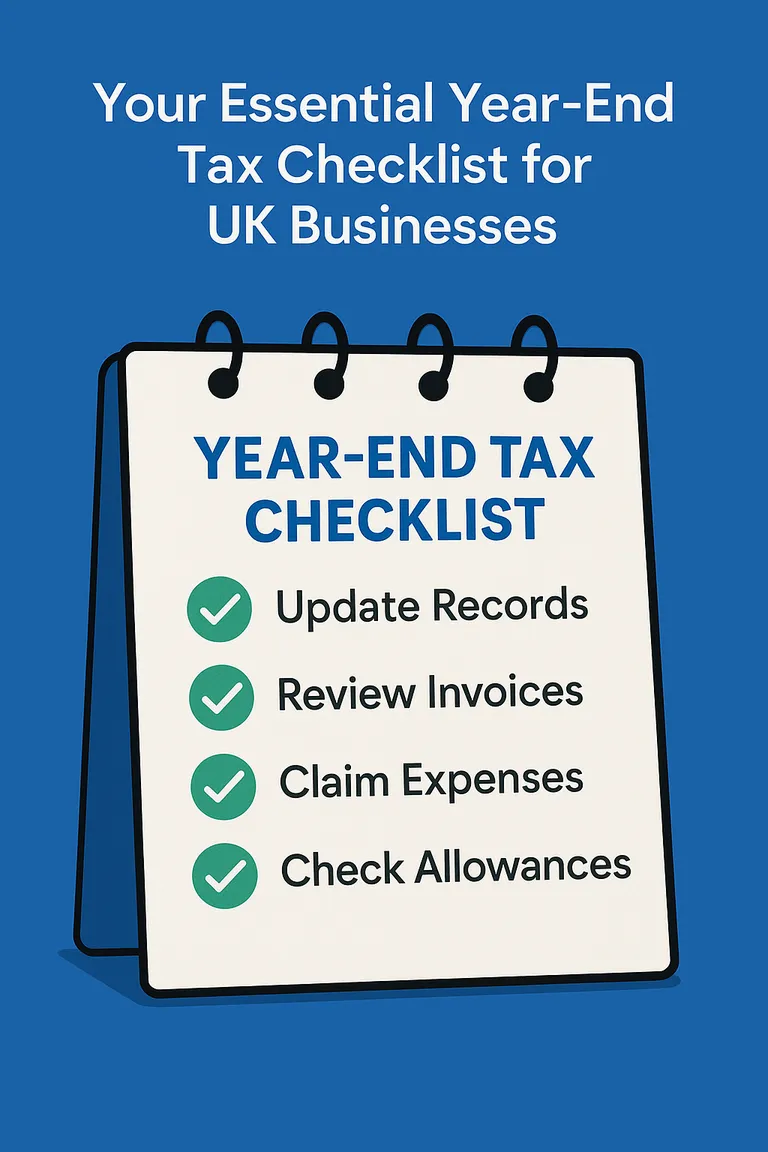
Use this essential year-end tax checklist to stay organised, minimise tax, and enter the new financial year with confidence.
1. Bring Your Bookkeeping Fully Up to Date
Clear, accurate records are the foundation of a smooth year-end.
Make sure you have:
-
Reconciled all business bank accounts and payment platforms
-
Logged all invoices, bills and receipts
-
Updated expense claims, mileage logs and cash transactions
-
Reviewed payroll reports and staff records
If you’re using cloud accounting software like Xero, QuickBooks, or FreeAgent, now is the time to tidy up outstanding balances and correct any discrepancies.
2. Review Outstanding Invoices and Supplier Payments
Outstanding invoices can distort your true financial position.
Check for:
-
Customers with overdue payments
-
Any debts that should be written off
-
Unprocessed supplier bills
-
Duplicate or incorrect entries
Effective credit control improves cash flow—and may reduce your year-end tax bill.
3. Claim All Allowable Business Expenses
Many UK businesses lose money each year simply by failing to claim legitimate expenses.
Don’t forget:
-
Home office allowances
-
Software, apps and subscription services
-
Professional fees (accountancy, legal, memberships)
-
Training and development
-
Travel and subsistence
-
Marketing and advertising
If you’re unsure what you can claim, Clarus can review your spending and ensure you maximise all allowable deductions.
4. Make the Most of Year-End Tax Reliefs and Allowances
Before the year closes, take advantage of available reliefs that can significantly reduce your tax bill.
Key reliefs include:
-
Annual Investment Allowance (AIA) – 100% relief on qualifying equipment
-
R&D tax credits – even for non-technical businesses that innovate
-
Capital allowances on vehicles, machinery and assets
-
Employment Allowance (if eligible)
-
Pension contributions for directors and employees
The right planning can deliver substantial savings. Clarus can guide you through the options relevant to your business.
5. Review Director Salary, Dividends & Pension Strategy
For limited companies, this is essential.
Consider:
-
Is your director salary tax-efficient?
-
Should you issue dividends before the tax year ends?
-
Are you maximising pension contribution allowances?
A well-planned remuneration strategy ensures you pay only what you need to—nothing more.
6. Check Payroll Accuracy and Employee Benefits
HMRC can impose penalties if payroll and reporting aren’t correct.
Be sure to:
-
Update employee details
-
Reconcile PAYE, National Insurance and pension contributions
-
Review P11D benefits such as vehicles or medical cover
-
Ensure workplace pensions are correctly processed
Clarus can manage your payroll to keep your business fully compliant, all year round.
7. Conduct a Stock Take (If Applicable)
If your business holds stock, your year-end valuation must be accurate.
Review:
-
Slow-moving or obsolete stock
-
Damaged goods
-
Stock write-downs
-
Physical inventory vs recorded inventory
Correct stock valuation affects profits, tax liabilities, and financial reporting.
8. Review Cash Flow and Forecast Upcoming Tax Bills
Year-end is the ideal moment to step back and assess your financial health.
Consider:
-
What tax payments are due in the next 6–12 months?
-
What recurring costs will impact cash flow?
-
Are there seasonal trends you need to factor in?
Clarus offers forecasting support to help you plan ahead with clarity.
9. Evaluate Whether Your Business Structure Is Still Right
Your current setup might not be the most tax-efficient.
Ask yourself:
-
Should I remain a sole trader or become a limited company?
-
Should my business register for VAT (or deregister)?
-
Do we need to restructure ownership or add directors?
As your business evolves, your structure should evolve too.
10. Book a Year-End Review With Clarus Accountancy Group
A professional review can uncover tax-saving opportunities you may not have spotted.
During a year-end consultation, we:
-
Ensure full HMRC compliance
-
Identify tax reliefs and allowances
-
Prepare year-end accounts and tax returns
-
Create a personalised tax planning strategy
-
Support you with bookkeeping, payroll, and VAT
Our goal is simple: give you clarity, confidence, and more time to grow your business.