Environmental, Social and Governance (ESG) reporting has quickly moved from a “big business thing” to something small businesses can’t afford to ignore. Once seen as optional, ESG is now shaping investor decisions, supply-chain requirements, consumer behaviour, and even recruitment.
For clients of Clarus Accountancy Group, understanding ESG isn’t just about compliance — it’s about staying competitive in a market where transparency and sustainability matter more than ever.
🌍 What Exactly Is ESG Reporting?
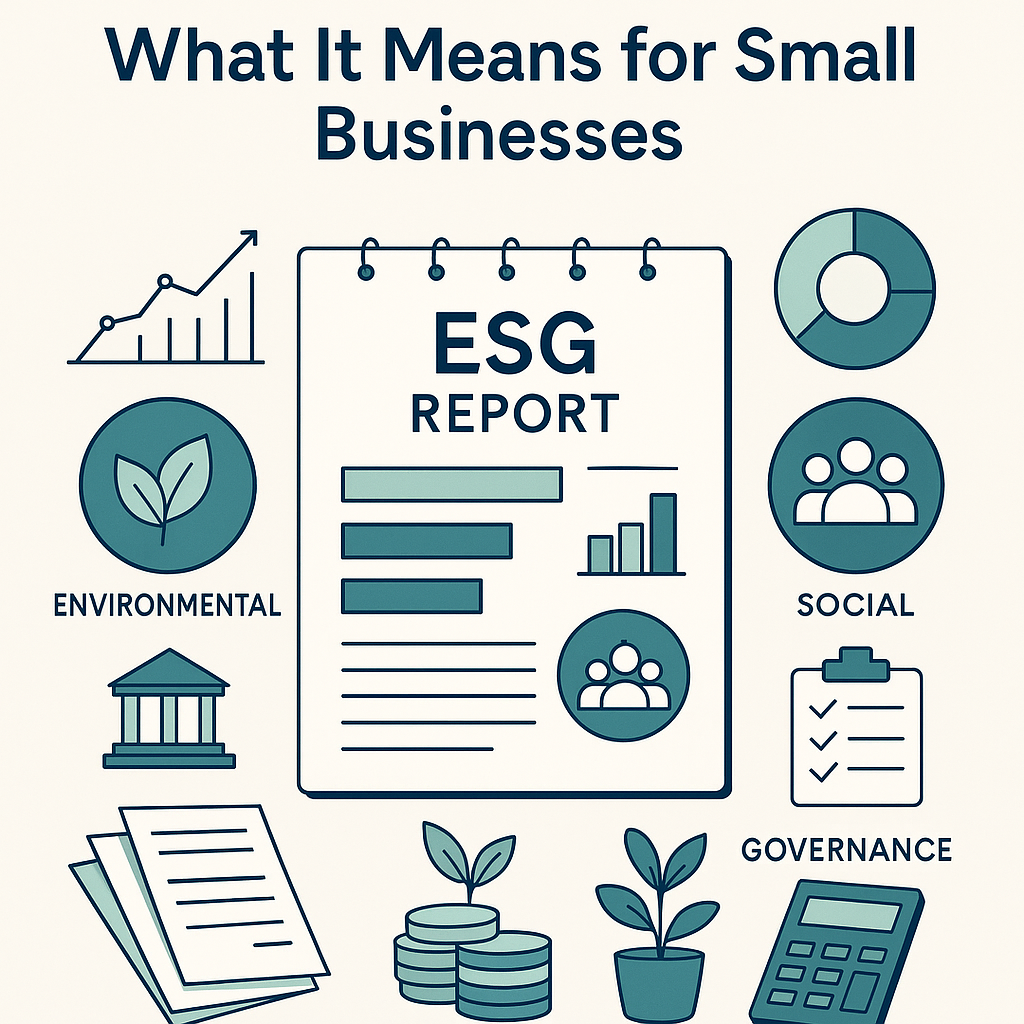
ESG reporting gives stakeholders a clearer view of how a business behaves beyond its financial statements. It covers:
E — Environmental
Energy use, waste management, carbon footprint, recycling, pollution control.
S — Social
Employee wellbeing, diversity, community impact, customer relationships, training or safeguarding measures.
G — Governance
Leadership structure, policies, data protection, ethics, risk management, anti-corruption practices.
In short, ESG tells the story of how responsibly and sustainably a business operates.
📌 Why Small Businesses Should Care
Even if a small business isn’t legally required to produce an ESG report yet, many are feeling pressure from:
1. Supply Chain Requirements
Large companies increasingly require their suppliers — including SMEs — to demonstrate ESG performance.
2. Access to Finance
Banks and lenders are already adding ESG criteria into risk assessments. Strong ESG = better finance terms.
3. Customer Expectations
Consumers (especially younger ones) reward businesses that operate ethically and sustainably.
4. Recruitment & Retention
ESG-led companies attract talent that care about values, not just paychecks.
5. Future-Proofing
Regulations are shifting toward sustainability. Early adopters will find compliance easier — and cheaper — later.
📊 What Goes Into an ESG Report for a Small Business?
Small businesses don’t need complicated frameworks.
Clarus Accountancy Group can guide clients through simple, meaningful metrics such as:
Environmental Metrics
-
Energy consumption
-
Waste reduction
-
Paperless processes
-
Sustainable procurement
-
Carbon-reduction initiatives (e.g., EVs, LED lighting)
Social Metrics
-
Staff training
-
Health & safety practices
-
Diversity initiatives
-
Community involvement
-
Customer satisfaction measures
Governance Metrics
-
Policies and procedures
-
Clear organisational structure
-
Cybersecurity
-
Data protection (GDPR)
-
Ethical behaviour and compliance
Clarus can help SMEs turn these into practical, easy-to-understand reports that demonstrate good governance and sustainability.
🏆 How ESG Benefits Small Businesses
For SMEs supported by Clarus Accountancy Group, ESG reporting can:
-
Improve brand trust and credibility
-
Open doors to grants and greener finance
-
Strengthen relationships with eco-conscious customers
-
Reduce energy and waste costs
-
Boost staff morale and retention
-
Enhance long-term resilience and value
This is not just a reporting exercise — it’s a smarter way to run a business.
🔮 ESG and the Future of Small Business
As the UK moves further toward net-zero targets, ESG will become a normal part of business reporting, even for small organisations.
The good news? SMEs who start now gain a serious competitive advantage.
And with expert guidance from Clarus Accountancy Group, ESG reporting becomes manageable, meaningful, and genuinely beneficial.
✅ SEO Information
Primary Keyword:
ESG reporting for small businesses
Secondary Keywords:
-
SME sustainability
-
ESG compliance UK
-
small business governance
-
environmental reporting for SMEs
-
Clarus Accountancy Group sustainability
-
ESG benefits for small businesses